Thoughts:
"Usability" is both a Science and an Art. It is a science because it utilizes the objectivity of the scientific method and its processes. It is also an art in that one of the goals is a subjectively positive experience with respect to perceived quality, presentation, and acceptance. And, as with anything dealing with a multivariate environment, the phrase "It Depends" applies.
"Design Thinking" is a buzzword. The basis of UX research is to provide input for the usage and design of Human-Machine systems in the users' context. Further, it focuses on what is pragmatic, as any design that fails to meet the operational needs of the user or goes over budget and time frame for the project is useless to both users and the business. I therefore put to you that "Design Thinking" is a street name for the uninitiated for the true intent and purpose of Usability and Human Factors Engineering. Having said that, "Futures Thinking" is the direction of lasting UX as it brings the expertise of the UX Strategist into the design loop.
"A User Interface is like a Joke. If you have to explain it, it's not that good." - Wise UX Proverb
Overview:
David on LinkedIn
*One Page shorty Resume
*Detailed Resume
Selected Case Studies
Contact Me:
eMail: davidmbatten@yahoo.com
Cell: 737-781-9261 (text)
What Roles Make Up a UX Department and Where Does David Fit In?
Quick overview of UX Research Methodologies.
Overview of UX Design Trade Offs.
About Me
Principal UX Researcher | Human Factors Engineer | 20+ Years Bridging Science & Design
I approach User Experience through the lens of a formally trained Human Factors Engineer. My "scientific bias" isn't just a preference—it’s a commitment to objective truth. With over two decades of experience across IBM, Citibank, and Dell Technologies, I specialize in transforming complex data into intuitive, high-stakes B2B and B2C interfaces.
Mentorship-First Mission & Leadership
I lead with the precision of a scientist and the patience of an educator. Coming from a legacy of teachers, lawyers, and doctors, I believe in moving teams past "gut feelings" toward a rigorous, evidence-based understanding of the user. I don't just deliver data; I build the mental frameworks designers need to defend their work with absolute certainty. I require deep attention to the process because, in my experience, the details are where the most critical human truths live.
Throughout my career, I’ve navigated the full spectrum of the UX lifecycle: from publishing research in the International Journal of Industrial Ergonomics to leading global research strategy as a VP and Principal. Currently, at Dell Technologies, I’m focused on democratizing research—mentoring designers and ensuring our public-facing demographics are reached through evidence-based design.
My Mission: Building High-Velocity, Evidence-Based Cultures
In my next role, my goal is to serve as a force multiplier for design teams. I don’t just "do" research; I architect the systems that allow designers to become objective researchers themselves. For startups and lean organizations, I bridge the gap between "moving fast" and "moving correctly" by replacing gut-feelings with rigorous, repeatable frameworks. I leverage my 20+ years of enterprise experience and formal Human Factors training to mentor teams, ensuring that every design decision is a defensible, scientific certainty rather than a creative guess.
Core Expertise:
Methodologies: Experimental Design (Lab & Remote), Heuristic Analysis, First Click, Card Sorting, and Tree Testing. Strategic Tools: Eye Tracking (Tobii/iMotions), Baymard Best Practices, UserZoom, Qualtrics, Usertesting.com, and Optimal Workshop
Background (UX Research and Contextual, Pragmatic, Data-Driven UX Design)
- Corporate/Technology: Principal UX Researcher at Dell Customer Experience / Prior Advisory Human Factors Engineer at IBM
- Dedicated to UX research for user interfaces and product requirements for multi-million dollar products
- UX Design for IBM AIX Web-based System Manager
- UX Design for IBM Networking Hardware Division's Configuration Tool GUI
- UX Testing for LCD touch screens, Kiosks and IBM Store Systems Point of Sale Terminals
- UX Research for Dell / EMC Strategicintegration
- UX Research for the Dell Premier Experience
- Corporate: IBM Systems Group division liaison to the IBM UX Corporate Counsel & Department ADA/508 compliance officer
- Education: Former Director of Web Content and Usability at the University of Texas, El Paso
- UX design for various UTEP web properties
- Increased home page hit rate by over 333% and the corresponding increase in enrollment of over 11%
- Financial/Corporate: Former VP of User Research and Insights at Citibank
- Responsible for creating NPS comments analysis procedure which was formally adopted by Citi
- Established a systematic and regular large sample competitive assessment utilizing User Zoom to further Citibank's goals
- Created Citi Mobile App public comments analysis procedure which was formally adopted by Citi
- Technology: Former UX Architect & Researcher for CyberSponse, the first enterprise automation and orchestration platform that combines both cyber security solutions with human intuition.
- Entertainment: Former Senior UX Architect / UX Researcher for Group1200 Media and FUNimation Entertainment, LTD.
- UX Research, Benchmark and VoC for FUNimation Films and FUNimation.com
- Contextual, Pragmatic Data Driven UX Design for Attack on Titan, FUNimation Films and yet to launch FUNimation.com websites
- Agency: Former Head of User Research at Tekzenit, Inc (a full service agency)
- Created the User Research department, was responsible for staffing and the creation of a full usability lab (User Zoom, Tobii Eye-tracking, Morae, online surveys, etc)
- Provided research support to over 40 UX designers involved in Tekzenit contract with AT&T
- Startup: UX Architect at Cybersponse
Strengths (UX Research, UX Architecture, UX Strategy)
- End-to-end experience with all aspects of research (study design, recruiting, moderation, analysis, reporting)
- Extensive Hands-on experience with lab-based user testing, A/B testing, BERT (Bipolar Emotional Response Testing), Paired Comparison Testing, card sorting, tree testing, remote testing, paper prototype testing, iterative prototype testing, Eye-Tracking, concept testing, field research, and survey design.
- ADA & Section 508 Compliance Assessment and Design
- Extensive experience with research utilizing UserZoom, UserTesting.com, Morae, Tobii eye-tracking, surveys (Qualtrics), Optimal Workshop, SUS (System Usability Scale), NPS (Net Promoter Score),Think Tank software suite and purely observational studies
- Analysis of Quantitative as well as Qualitative Data
- Fluency in best practices for UX design as well as user research
- I enjoy working with designers and programmers to ensure that technological as well as aesthetic needs are met
I am the caretaker of four rescues:




Detailed Project Views (1993 - 2016)
(currently under NDA with Dell Technologies)
1993 - 1995
IBM Store Systems & IBM Networking Hardware Divisions (Research Triangle Park, NC)
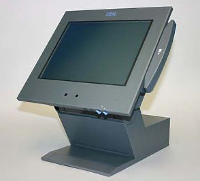
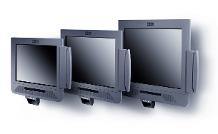
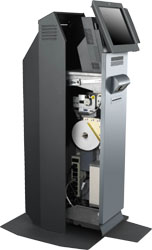
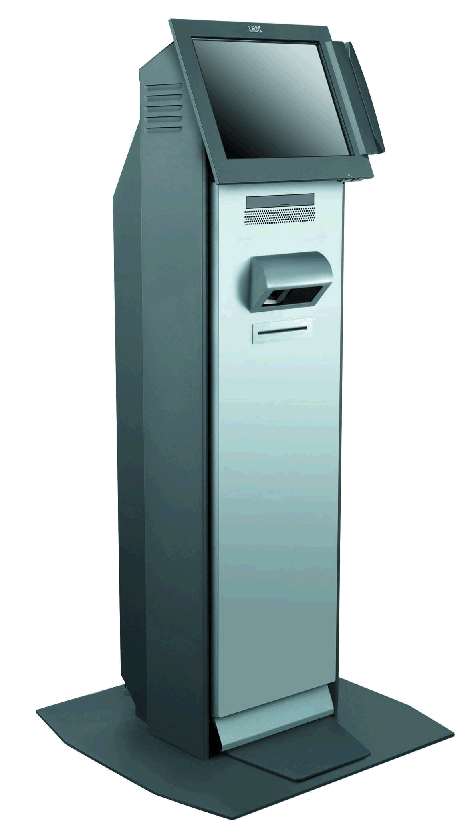
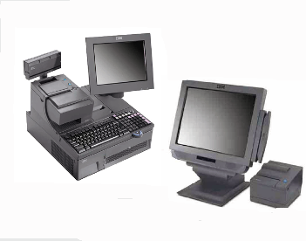
Problem: General Human Factors exploratory & evaluative research on hardware components such as display angle and hardware placement for IBM Store Systems LCD touch screen POS terminals and Kiosks.
My Role: Junior Researcher
Competencies Utilized: Usability test creation & data analysis
Outcome: IBM POS 4690 Hardware modification leading to a product with a 20+ year run in retail and restaurant stores with later adaptation for IBM Kiosk line.
- LCD Touch Screen Angle - ‘International Journal of Industrial Ergonomics’ – “Optimal Viewing Angle for Touch-Screen Displays: Is There Such a Thing?” 22, 343-350.
- User Performance & Check Conditions while using the IBM 4690 MICR Reader Check Printer - IBM Internal Publication
- User error rates and subjective measurements relating to Placement of IBM POS MCR - IBM Internal Publication
- User error rates and speed relating to usage of NCR DynaKey vs IBM SurePoint Touch - IBM Internal Publication
- Color Coding to Facilitate Performance of Focused Attention Tasks with Object Displays. Proceedings of the Human Factors Society 36th Annual Meeting, Vol. 2, 1493 – 1497.
1995 - 1999
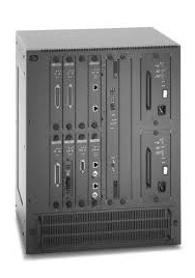
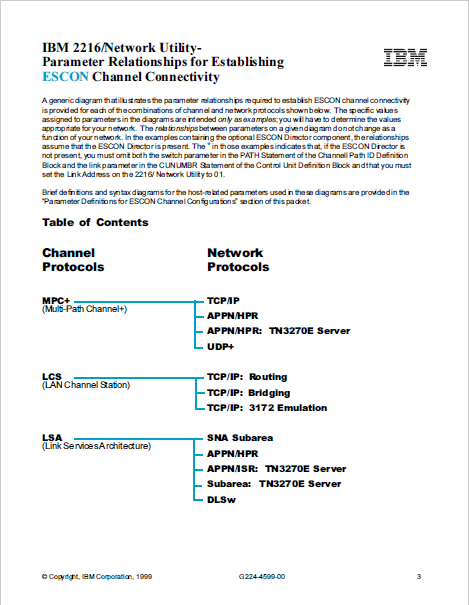
Problem: IBM 2216 was being re-purposed to take the place of the IBM 3172 which allowed direct communications between Mainframes and the outside world. Customers in that environment could not configure 2216 to work, as that was not its original purpose (and that the manual was 454 pages long).
My Role: Lead Researcher, UX Designer, UI Designer
Competencies Utilized: Exploratory research design & Usability Testing
Outcome: Coca-Cola, Telekom Italia and Deutsche Bank accounts were saved and product had successful hardware run of over 11 years
- Solution: Bypass existing documentation and create new set that maps to the mental model / environments of the new users.
- 2216 Re-Purpose documentation
- Customer/Site Visits
- Contextual Inquiry
- Usability Testing
Other Work in this area:
- 2216 Pre-sales Configurator (web based)
- Stand alone Configuration Tool for ALL IBM networking hardware (Portfolio of over 50 products)
- UI Best Practices/Standards
- Usability Testing
- Designed IBM Networking Hardware Division’s first ‘Install-Shield’ like PC software installer
1999 - 2005
IBM Server Group Division (Austin, TX & Tuscon, AZ)
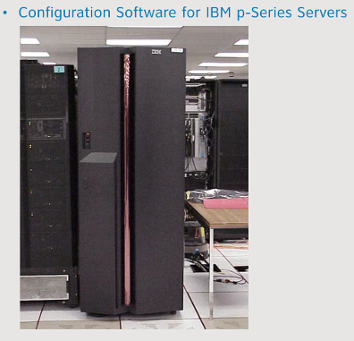
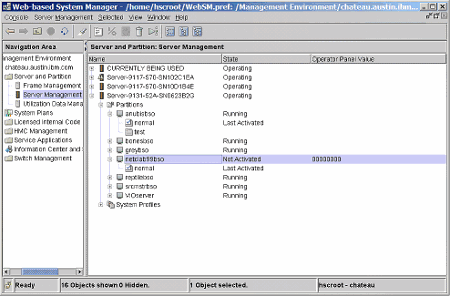
Problem: Continued refinement and functional enhancement of a GUI web based system management tool that provides visualization and support for novice users while not impeding expert users.
My Role: UX lead for 7 of the 20 apps contained in the software suite, UXD, UI Designer
Competencies Utilized: Planning & staging focus groups, requirements gathering, UX Design, collaboration with graphic design and development, usability test planning, data analysis
Outcome: Ongoing gains against HP-OpenView and Solaris SMC system management products
- AIX Operating System-Web Based System Manager
- Focus Groups
- Iterative UI Design
- Usability Testing
- Patent Issued (IBM) #US20030217132 “System and method for remotely managing a computer system by a wireless communications device” (2003)
- Cluster Configuration
- Network Visualization for management software
- Strengthening AIX Security: A System-Hardening Approach
- Contextual Inquiry
- Local and Long Distance customer interviews
- Contributor: AIX 5L Differences Guide (IBM Redbook)
2007 - 2010
The University of Texas at El Paso (El Paso, TX)
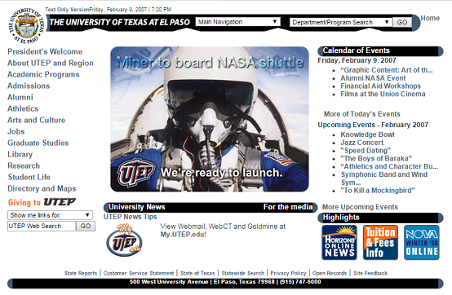
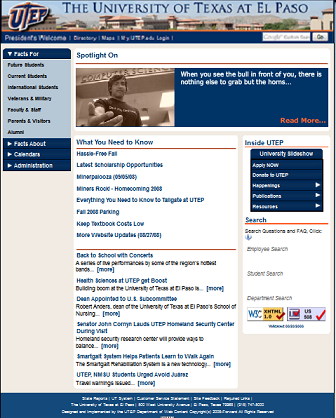
See the initial redesign (note that the header which does not reformat correctly from internetarchive.org is due to a mismatch between older and newer HTML and browsers)
Problem: The University website had become a jumble of navigational elements that was confusing to the students, visitors and faculty/staff. (See Top Left) This failure of information architecture was further exacerbated by broken interaction patterns and the use of non standard widgets in the interface (news tickers, elements that seemed clickable but were not and items that were click-able which had no affordance.
The Home Page had dropped in viewership significantly. Users were bookmarking specific pages (when they found them) in order to locate needed information instead of having an easy pathway through the Home Page. As the first greeting and Business impression, the Home Page needed a total rebuild.
My Role: Director of Web Content / UX Architect
Competencies Utilized: Ethnographic Research, Focus Groups, User Surveys, A/B Testing. SEO optimization, Tree Testing, Card Sorting, Section 508 Compliance, Compromise with IT resources
Outcome: The Home Page Redesign (See Bottom Left) increased hit rate and readership by over 333% and was part of the effort that resulted in 11% increase in enrollment after roll out. This was accomplished by doing three major things:
- Reworking the Home Page main navigation to directly point to TOPICS and information relevant to a user's ROLE (role-based and topic-based navigation)
- Providing Information Quick Guides which consolidated disparate pieces of information important to user types into one place. Information Quick Guide
- Creating informational Tours of the University and its highlights
Background: The University Website was powered by DotNetNuke and student/staff postings as a means of cost control which restricted creativity in relation to a free form HTML/scripting perspective. Certain non-standard elements, such as marketing, promotion of certain academic areas over others, and news tickers had created a jumble that no single entity had control over. Further, student complaints not only centered around navigation but the fact they felt as if they were second class citizens; the information didn't seem to be directed at them, but served the purpose of glorifying the University and its achievements.
Whereas the end result was less than my personal vision, the new information architecture provided easy access to drill down into areas based on persona's, interests, and academic areas while being less visually cluttered. The greatest compliment I received was from students who felt it was more oriented to their online needs and academic life.
2011 - 2013
Citibank (Jacksonville, FL)
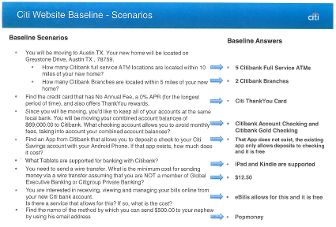
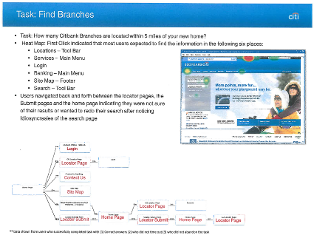
Problem: A major bank was experiencing a drop off in deposit account and credit card conversions. Further, client NPS scores were decreasing in relation to the competition. As VP of User Research and Insights, I was tasked with benchmarking the current web experience with existing clients based on common tasks and comparing that to potential new client task results.
My Role: Research Principle
Competencies Utilized: Staff scheduling/planning, Project management, usability test construction, test execution, data analysis.
Methodologies / Tools Utilized: UserZoom, First Click Analysis, Click Stream Tracking, pre-post satisfaction scores, SUS scale, ERT (Emotional Response Testing).
Outcome: Several key areas of failure in the current UI were discovered as well as finding blockages to conversion by potential customers.
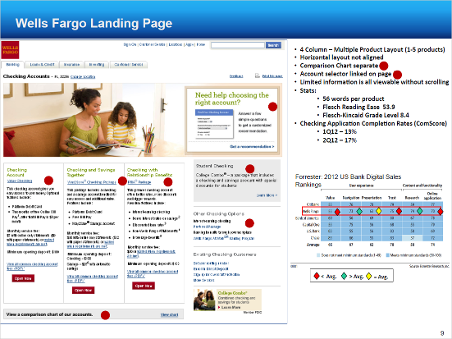
Problem: A major bank was experiencing a drop off in checking account conversions in relation to the competitors. As VP of User Research and Insights, I analyzed the various pages from a complexity standpoint to see if the competitors had verbally and visually less complicated page structures thanCitibank.
My Role: Research Principle
Competencies Utilized: Analysis skills
Outcome: Several strong correlations were found between growth businesses and their aesthetics, number of words per product, reading grade level verbiage, column vs row layout schemes and link placement.
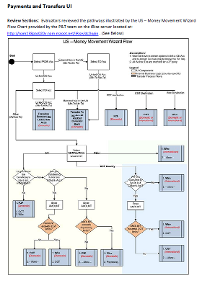
Problem: Customers at a major bank were having trouble understanding/navigating the Money Movement flow when transferring money between linked accounts, to other people, between countries, and making payments.
My Role: Research Principle
Competencies Utilized: Neilsen/NormanHeuristic Analysis
Outcome: Many issues were identified and wireframes were created to rectify those issues in future implementations.
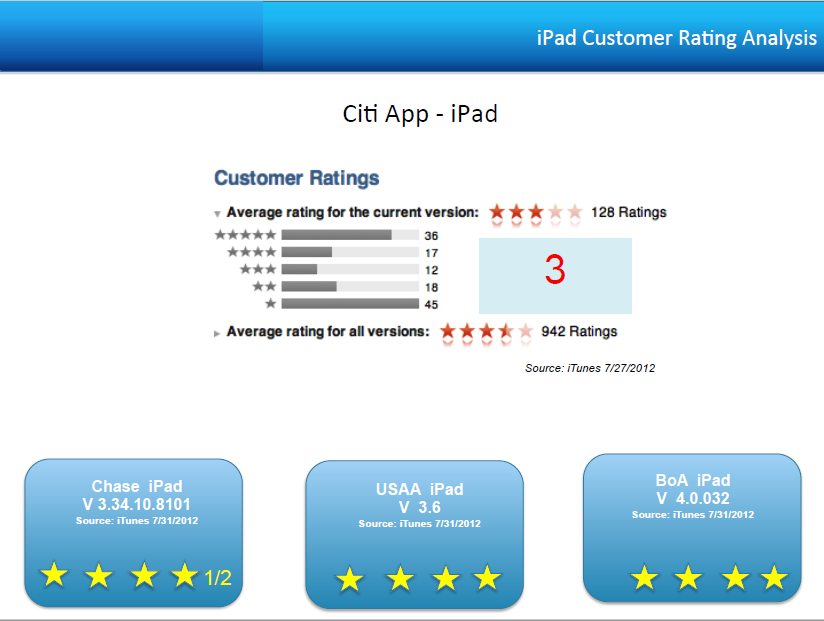
Problem: Citibank mobile apps (iPad, iPhone, Android, Kindle Fire) were experiencing alarming rates of complaints and low NPS scores. A thorough public comments analysis was needed to discern if those complaints were due to usability, Technology or Business Process issues.
My Role: Research Principle
Competencies Utilized: Comments Analysis
Outcome:
- After this highly successful analysis was first performed, Citi put into place this type of public comments analysis for their apps every 60 days
- Feedback was funneled into area work streams in order to reduce customer complaints
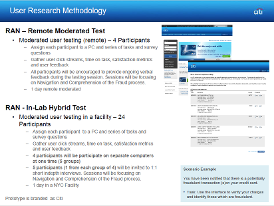
Problem: A user testing plan was needed for a future study dealing with AO fraud verification
My Role: Research Principle
Competencies Utilized: Test Planning
Outcome: Test plan approved
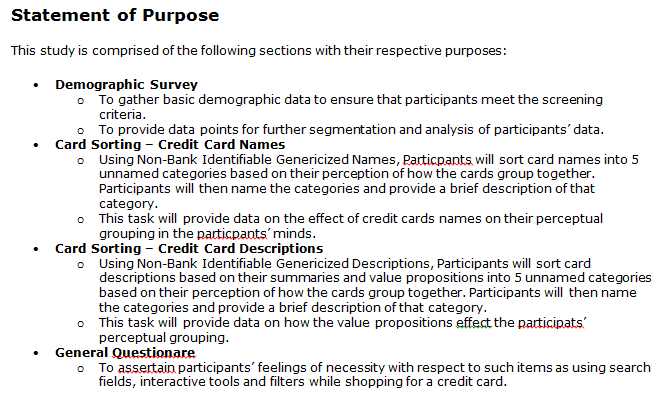
Problem: A sample Test Discussion Guide for an online remote Card Sort study.
My Role: Research Principle/Test Designer
Competencies Utilized: Test Planning/Experimental Design
Outcome: Test plan approved
2013 - 2014
Tekzenit (Irving, TX)
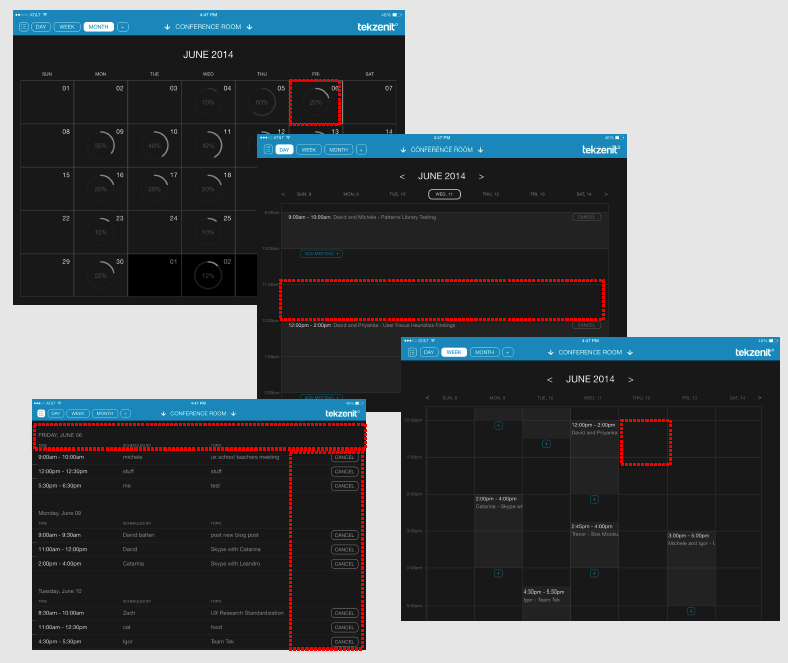
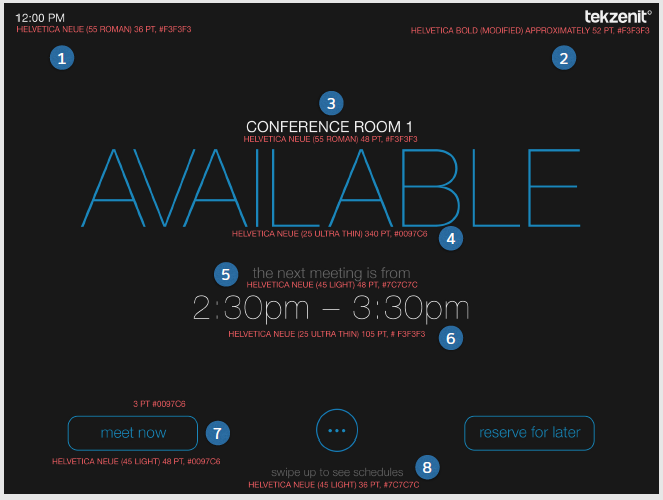
Problem: CRS app was designed w/o any usability/user research input and was to be used to promote company expertise in App development. After release one, management decided to go back and address their UX oversight.
My Role: Research Principle
Competencies Utilized: Staff scheduling/planning, Project management, usability test construction, test execution, data analysis, accessibility assessment, Eye Tracking analysis
Outcome: A more user friendly demonstration app for the company
Phase I (Evaluate current design)
- Evaluative in-lab usability testing
- Task-based Summative
Phase II (Assess changes implemented after Phase I)
Project halted by management
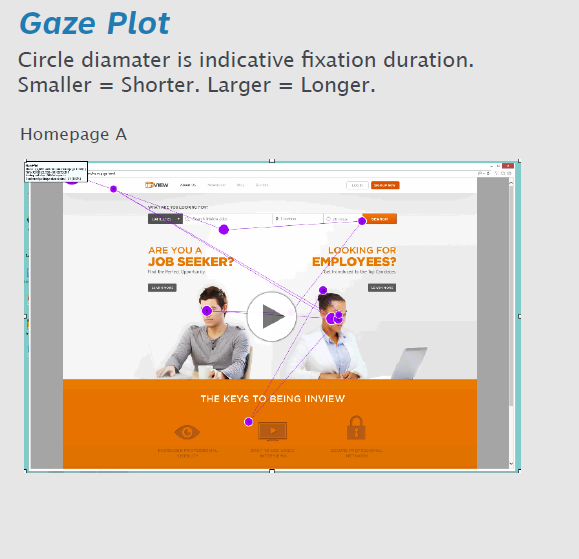
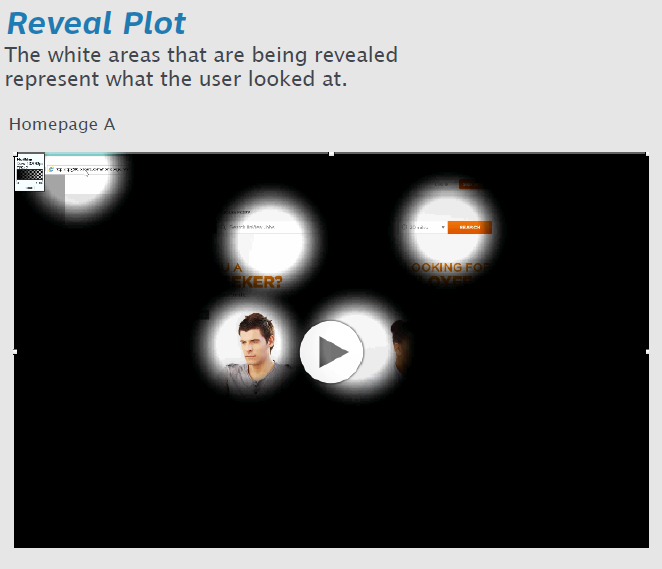
Problem: Conversion rates for client's services were dismal in relation to expectations
My Role: Research Principle
Competencies Utilized: Staff scheduling/planning, Project management, usability test construction, test execution, data analysis, accessibility assessment, First Click Analysis, Eye Tracking analysis
Outcome: Significant design changes which lead customers to the conversion step
Phase I (Evaluate existing website to provide suggestions for redesign)
Phase II (Compare 2 designs created with input from Phase I)
- Task based comparative in-lab evaluation
- First click analysis
- Subjective ratings
- Eye-tracking assessment
Note: Eye tracking is a technology which detects a user's fixations on a screen, time taken to arrive at a fixation point, the length of a given fixation, the number of fixations per element and the order of visual fixations. In combination with the Think Out Loud method (Retrospective or Concurrent), it allows us to make inferences about cognitive processes during task completion and identify Areas of Interest (AOI). This particular technology requires insight and interpretation of the tester and should be combined with other quantitative or qualitative research to provide valid user insights. Here is an excellent beginners article on eye-tracking.
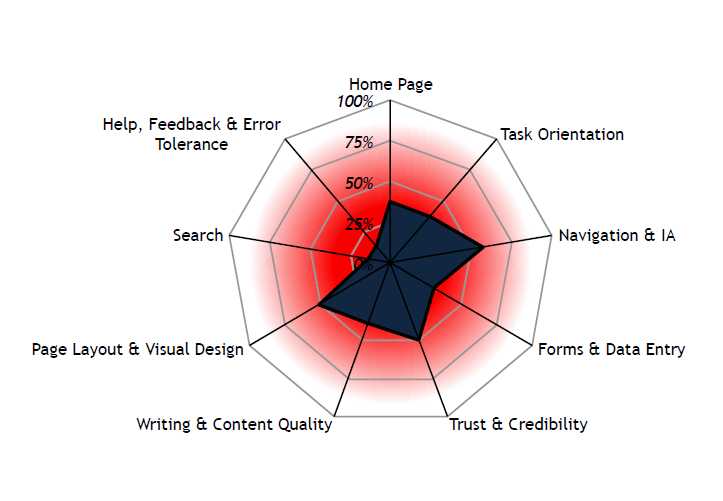
Problem: Customer wished to take home grown web application mainstream in order to increase company revenue. Customer also wished for UX project estimation in order to stay within budget
My Role: Research Principle
Competencies Utilized: UserFocusHeuristic Evaluation, client meetings, project estimation
Outcome: We won the contract
- Assessment of website for Project Pitch
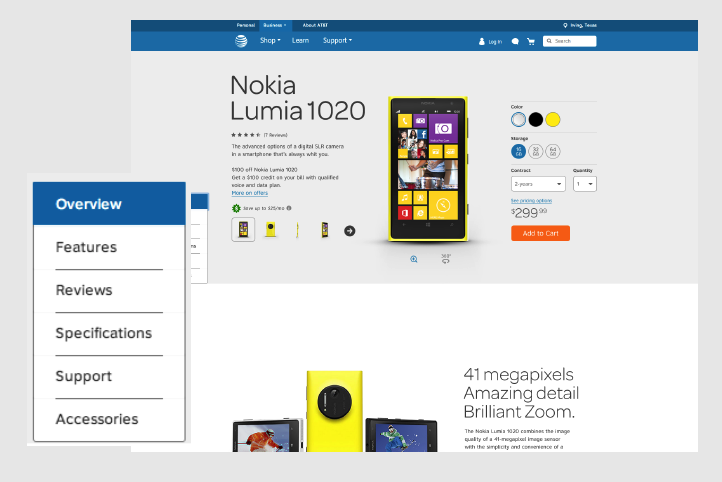
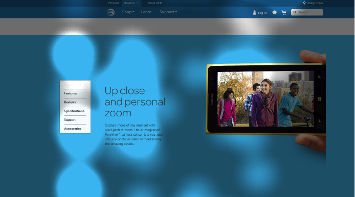
Problem: Prior studies suggested that a vertical navigation element would not be utilized by customers while navigating long pages due to multiple factors of the element, placement and recognition. Taking feedback/results from 3 prior tests a new navigational element was created addressing previously discovered issues. The new solution was then tested.
My Role: Research Principle
Competencies Utilized: Staff scheduling/planning, Project management, usability test construction, test execution, data analysis, accessibility assessment
Outcome: Research data was used to convince client that the design was usable, stable and acceptable by end users.
- Investigational Study
- In-lab
- Task-based
- Eye-Tracking
Note:Eye tracking is a technology which detects a user's fixations on a screen, time taken to arrive at a fixation point, the length of a given fixation, the number of fixations per element and the order of visual fixations. In combination with the Think Out Loud method (Retrospective or Concurrent), it allows us to make inferences about cognitive processes during task completion and identify Areas of Interest (AOI). This particular technology requires insight and interpretation of the tester and should be combined with other quantitative or qualitative research to provide valid user insights. Here is an excellent beginners article on eye-tracking.
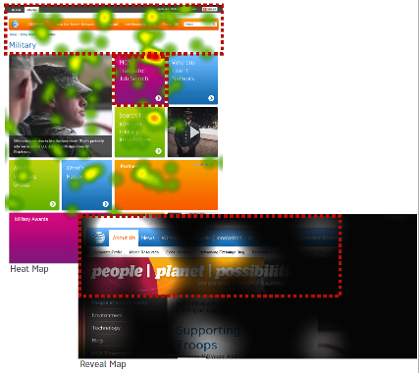
Problem: Potential client came with a request for help on a website created and utilized by employees. A complete assessment was performed.
My Role: Research Principle
Competencies Utilized: Staff scheduling/planning, Project management, investigation study construction, test execution, data analysis
Outcome: Significant design change suggestions were presented to the client; outcome pending
- Complete Investigational Study
- Heuristic Review
- Task-based in-lab usability testing
- Eye-tracking
- SUS Rating
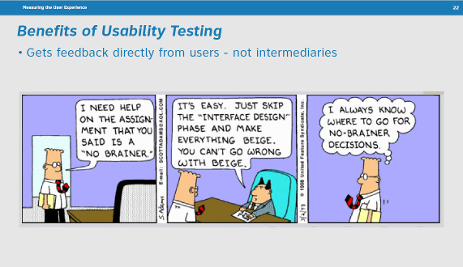
Problem: New UX designers were being hired by an agency that was ramping up for a large project with a major telecommunications company in Dallas, Texas. It was determined that many new designers had inconsistent backgrounds, or none at all, in User Centered Design and User Research. It was important for new designers to apply UCD methodology along with research to said project. This multi-day course was meant to be an introduction to the many areas of expertise the Research Department could provide to them in the hopes they would adhere to a more data driven approach to their designs.
My Role: Research Principle / Instructor
Competencies Utilized: Experience / Graduate Level course work


Problem: After several months of work on a large re-branding, modernization & packaging project the company could not decide which of the three logos to choose. The paired-comparison technique was used to provide input into their decision.
My Role: Research Principle
Competencies Utilized: usability test construction, test execution, data analysis
Outcome: Data presented to client in order help set their branding direction
NOTE: Paired Comparison Analysis is useful for weighing up the relative importance of different options. It's particularly helpful where priorities aren't clear, where the options are completely different, where evaluation criteria are subjective, or where they're competing in importance.
2015 - 2016
Group 1200 Media / FUNimation, Inc (Flower Mound, TX)
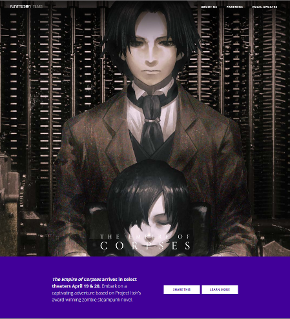
Problem: A new responsive website needed to be developed for a new business venture - Theatrical releases for an established streaming media company. Responsive designs were evaluated and business requirements solidified.
My Role: Senior UX Architect
Competencies Utilized: UX Design / Responsive Design / Wire-framing
Outcome: Design went through several iterations and certain business requirements were descoped. Final Wire-frames were approved and UI Design was implemented
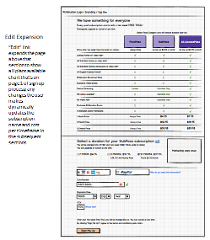
Problem: A new sign up and cancel scheme was needed for a streaming media website. This was designed based on the requirements presented from the marketing department
My Role: Senior UX Architect
Competencies Utilized: UX Design / Responsive Design / Wire-framing
Outcome: Early Design approved
- Early UX / Wireframe Design
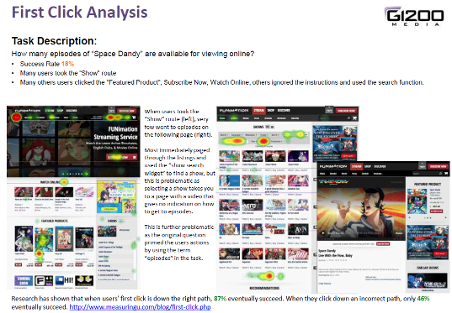
Problem: A complete baseline of an existing Streaming Media / Merchandise website needed to be completed in order to catalog issues and develop a road map for fixes and new designs and to drive management backing into additional resources to revamp existing website. This study was done by using participants who had never visited the website in order to obtain the "New User Perspective"
My Role: Senior UX Architect / UX Researcher
Competencies Utilized: UX Research / UserZoom / Data Analysis
Metrics Utilized: NPS* analysis, Pre/Post Perception surveys, Click stream analysis, First Click Analysis,Heat maps, Time on Task, Error Rates, Comment Analysis, ERT (Emotional Response Testing).
Outcome: Results fed into Design Requirements
* NPS is intuitive, easy to use, great for management, gives a common language in which to classify customers (promoters vs detractors), facilitates benchmarking and is correlated with increased business growth. However, it should be paired with customer comments/surveys in order understand what your customers like or dislike about your company. I use NPS to help identify issues in common between many users that lead to them being detractors.
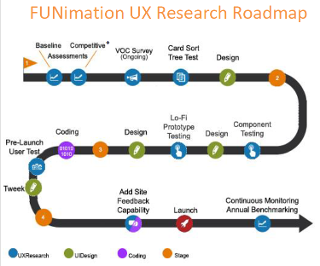
Problem: Newly formed UX Department needed to establish a UX research road map in order to provide upper management with a plan and costs for the first year + for UX research.
My Role: Senior UX Architect
Competencies Utilized: UX Research/Business Strategy
Outcome: UX Research Road map was well accepted and implemented.
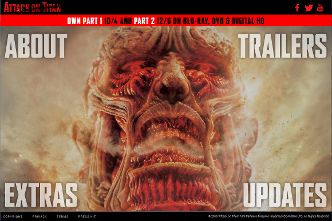


Problem: A new website for an important movie release needed to be designed exemplifying Usability, Extensibility, Responsive Design, and Theatrical Impact.
My Role: Senior UX Architect
Competencies Utilized: Wire-framing, UX Design
Outcome: Four Quadrant Design currently being adopted as a template for Movie Premiers. "Attack On Titan" Theatrical release website winner of 2015 MarCom Gold Awards, and the Dallas Texas ADDY Silver Awards. The "Attack on Titan" website went on to win GOLD in District Level ADDYS (Texas, Louisiana, Oklahoma, Arkansas).
2015 MarCom Gold Winner (website)

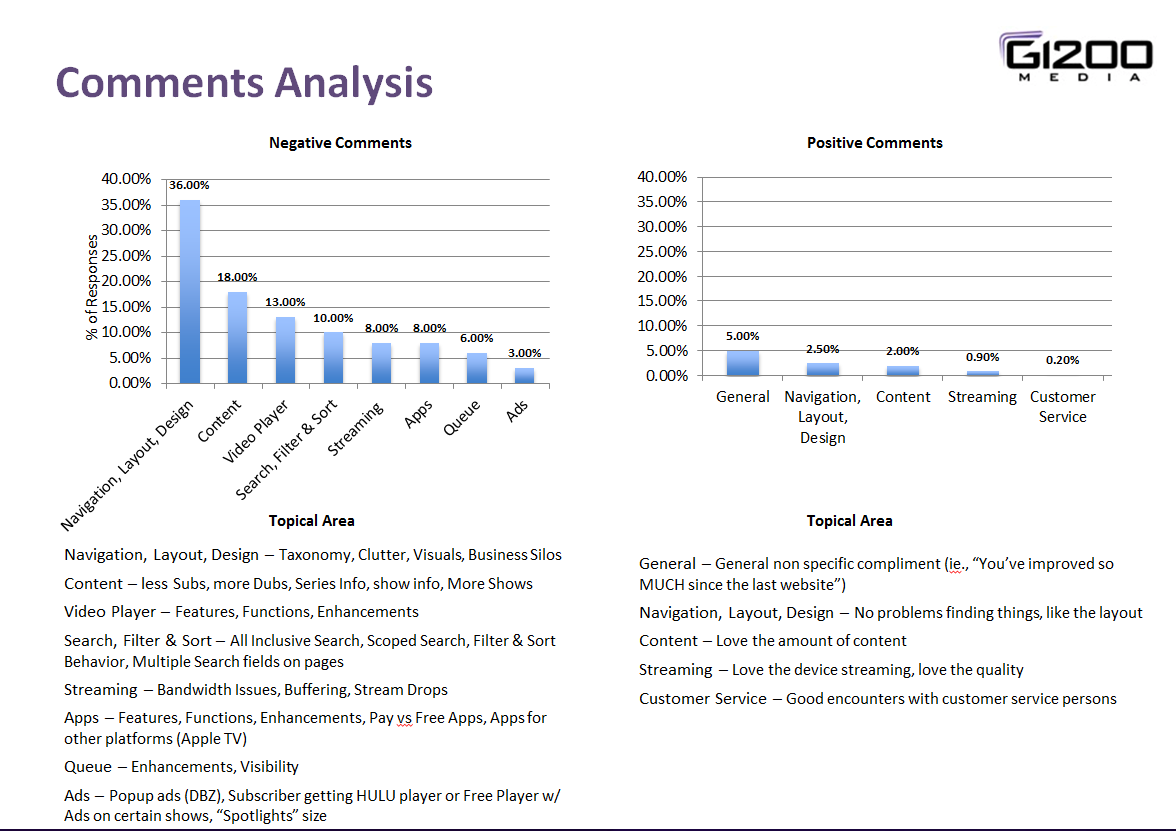
Problem: In order to find the intersection point between potential customers and existing customers a VoC survey was undertaken to find common issues.
My Role: Senior UX Architect
Competencies Utilized: UserZoom, UX Research
Outcome: Four distinct areas of concern were found to be common between potential customers and existing customers of a eBusiness website.
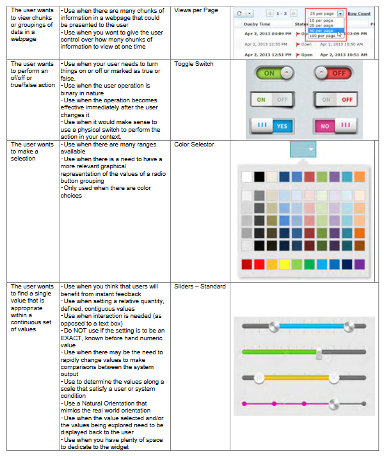
Problem: UI/UX department along with IT had no internal guidelines for widget (control) usage
My Role: Senior UX Architect
Competencies Utilized: UX/UI experience
Outcome: Company wide UI Widget Guidelines document created to go across UI Design, UX and Information Technology
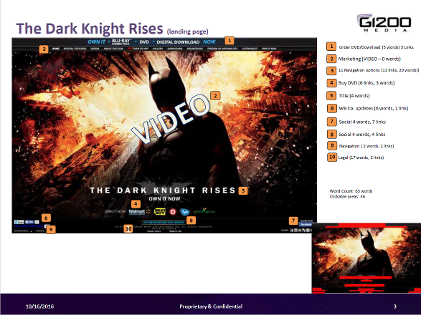
Problem: Marketing insisted on WORDS WORDS WORDS on theatrical release movie websites which is against the current trend, increases user cognitive load and results in decreased user satisfaction.
My Role: Senior UX Architect / Researcher
Competencies Utilized: UX/UI research
Outcome: Pending on Marketing to digest the results and take action on their verbose marketing materials
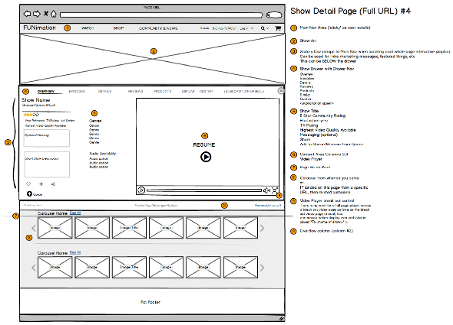
Problem: The website redesign required a radical new look and interactivity. The information should come to the user instead of making the user go to the information (and thus losing their place in the multidimensional content arenas). The website needed to promote streaming video, Forums, Community, Conventions, DVD/Blu-ray and gaming apps. TWO UX research studies were completed utilizing 819 test participants to perform standard visitors' tasks and identify weaknesses that this design addresses.
My Role: Senior UX Architect / Researcher
Competencies Utilized: UX Design/UI research
Outcome: The company is currently working with SONY DADC New Media Solutions to build the website and use the concepts in the annotated wireframes.
Website Early Annotated Wire-frames
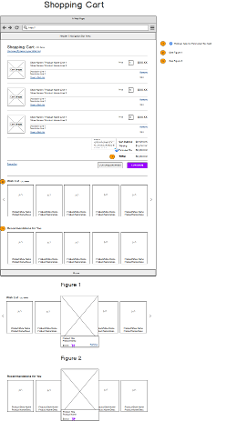
Problem 1: The streaming media only website will be adding physical product for customer purchase. The metaphor and interaction models should strive for a consistent experience. This was an exercise for integrating the two into a seamless experience for the customers. It encompasses search results, topical browsing pages, and shopping carts.
Problem 2: Shopping Cart and Checkout Experience should fit the shopping patterns of the Users. The company's users checkout with an average 2.3 products in their carts, so it should be tailored to that common experience instead of one in which a person would come away with dozens of articles in their shopping cart.
My Role: Senior UX Architect
Competencies Utilized: UX Design, Wire-framing
Outcome: Currently working with UI Design to create production flats.
Shopping/Product Early Annotated Wireframes
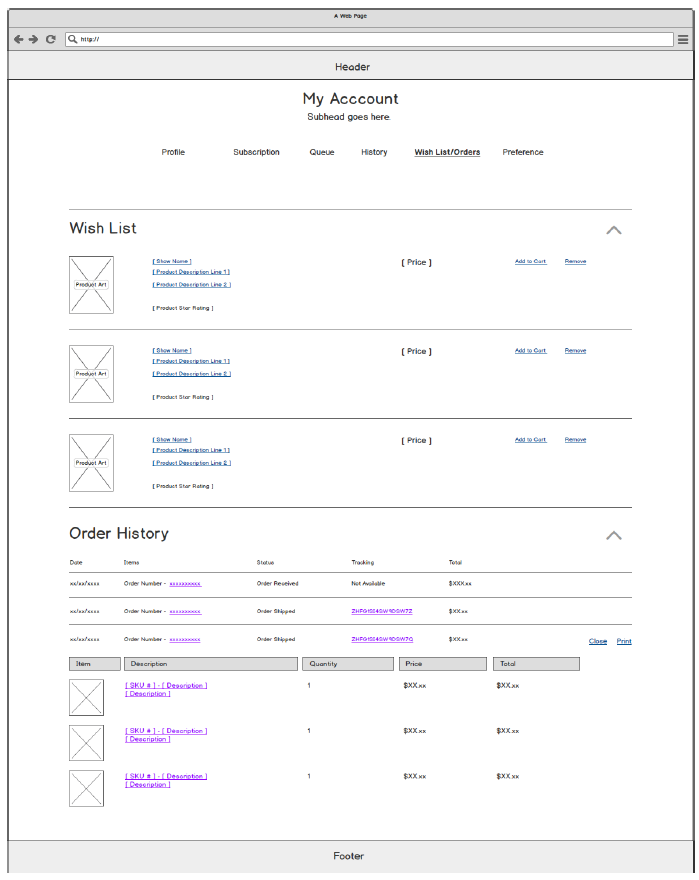
Problem : The user account section of this streaming video subscription service was particularly complicated, as it is to allow the user to manage such items as:
- Personal Information
- Social log in
- Address book for shipping addresses and payment methods
- Gift card balances
- Subscription Upgrades and Downgrades
- Streaming Feature Add Ons
- Subscription restart after plan lapse
My Role: Senior UX Architect
Competencies Utilized: UX Design, Wireframing
Outcome: Launch estimated August2016
Wireframes:
- Account Main Section
- Account Change Plan
- Account Restart Subscription
- Account Cancel Plan
- Account Cancel AddOns
2017 - Present
DELL Technologies / Principal UX Researcher (Round Rock, Texas)
I am currently employed at DELL Technologies and according to my non-disclosure agreement, I cannot post past or current research while employed by DELL.